Taste of the Mountains: How Sapa’s Food Tells a Thousand Stories
Nestled in the northern highlands of Vietnam, Sapa is more than just terraced slopes and misty peaks — it’s a living canvas of culture expressed through flavor. Every dish, from steaming bowls of thang co to hand-rolled sticky rice, carries generations of tradition, artistry, and resilience. I didn’t just visit Sapa — I tasted its soul. Here, food isn’t just sustenance; it’s storytelling, identity, and connection, served on a bamboo plate. The air hums with the scent of woodsmoke and cumin, and every meal unfolds like a chapter in an ancient, unwritten book. For travelers seeking depth, Sapa offers not only breathtaking landscapes but a profound journey through taste, memory, and community.
First Bite: Arriving in Sapa and the Immediate Pull of Aroma
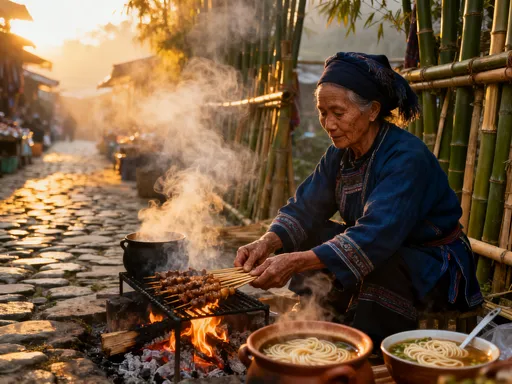
The journey to Sapa begins with a shift in atmosphere. As the train slows near Lao Cai and the road winds upward through pine-clad ridges, the temperature drops and the world grows quieter. Stepping into the town for the first time, one is met with a crisp mountain breeze carrying the unmistakable scent of grilling meat, toasted rice, and wild herbs. These aromas rise from roadside grills and open-air kitchens, wrapping around visitors like a warm invitation. It is not just hunger that responds — it is memory, curiosity, and emotion. The first meal in Sapa is rarely planned; it happens spontaneously at a small stall where a Hmong woman flips skewers of pork over glowing embers, brushing them with a sauce made from fermented soy and mountain pepper.
Food becomes the most immediate way to understand Sapa’s cultural richness. Unlike in cities where dining is often fast and functional, here every bite is layered with meaning. The flavors are bold yet balanced — smoky, sour, spicy, and earthy — shaped by centuries of adaptation to the highland climate. Each of the region’s ethnic groups contributes a distinct culinary voice. The Hmong favor bold fermentation and strong spices, often using ingredients foraged from the surrounding forests. The Dao people incorporate medicinal herbs into their cooking, reflecting their deep knowledge of natural healing. The Tay, known for their rice cultivation, create delicate dishes centered around sticky rice and freshwater fish from mountain streams.
What makes this sensory introduction so powerful is its authenticity. There are no artificial scents or mass-produced seasonings. The aroma that greets you is real, unfiltered, and deeply tied to place. It speaks of open fires, handmade tools, and ingredients gathered by hand. For many visitors, especially women who manage households and meals back home, this return to food as a craft — something slow, intentional, and nourishing — feels both familiar and profoundly moving. It is not just about eating; it is about remembering how food once connected families, seasons, and stories.
The Heartbeat of the Market: Sapa’s Central Market as a Cultural Stage
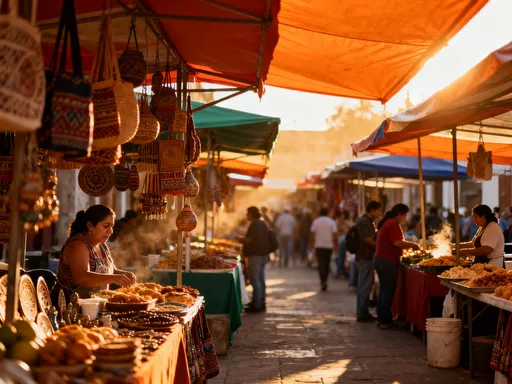
Sapa’s central market is not merely a place to buy supplies — it is a living theater of culture, color, and flavor. Open daily but most vibrant on weekends, the market pulses with energy as women in traditional indigo-dyed clothing arrange baskets of produce, dried meats, and handwoven textiles. Every stall tells a story. One vendor displays bundles of wild fennel, its feathery greens still dusted with mountain dew. Another offers jars of fermented bamboo shoots, their sour tang cutting through the cool air. Red rice, grown in high-altitude paddies, spills from woven bamboo trays in deep burgundy heaps, contrasting vividly with bright yellow corn and emerald-green mustard leaves.
What sets this market apart is the complete absence of imported or processed goods. Nearly everything on display is grown, gathered, or made within a short radius of the town. Farmers walk for hours from remote villages to sell their harvest, carrying baskets on their backs using woven straps that cross their foreheads. Their produce reflects the seasons: in spring, tender ferns and young garlic shoots appear; in autumn, plump pumpkins and smoked meats take center stage. Even the cooking done on-site — over small charcoal stoves — uses traditional methods. A woman might stir a pot of pork stew flavored with lemongrass and galangal, the steam rising like incense in the morning light.
The visual arrangement of food here is itself an art form. Vendors understand instinctively how color and texture draw attention. Bright red chilies are layered over pale mushrooms; purple eggplants nestle beside golden turmeric roots. Nothing is hidden in plastic wrap or sterile packaging. Instead, food is displayed openly, inviting touch, smell, and conversation. For visitors, especially those accustomed to supermarkets where everything is uniform and labeled, this sensory abundance is both overwhelming and deeply comforting. It reminds us that food was not always packaged, shipped, or standardized — it once grew close to home, changed with the seasons, and carried the fingerprints of the people who raised it.
From Farm to Wok: The Journey of Ingredients in Sapa’s Highlands
To understand Sapa’s cuisine, one must follow the path from terraced field to family table. The region’s most iconic feature — the cascading rice paddies that cling to steep mountain slopes — is not just scenic; it is the foundation of daily life. These fields, carved by hand over generations, are flooded in spring and golden by late summer. The rice grown here is mostly glutinous, or sticky rice, a staple that appears at nearly every meal. It is steamed in bamboo tubes or woven baskets, then served in communal bowls, often wrapped in banana leaves to retain warmth and fragrance.
Farming in Sapa is small-scale and sustainable by necessity. With limited arable land and rugged terrain, families rely on polyculture — growing multiple crops together in the same plot. Corn, potatoes, and leafy greens grow alongside rice, maximizing yield without depleting the soil. Pesticides and chemical fertilizers are rarely used; instead, farmers rotate crops and use natural compost. Chickens and pigs roam freely near homes, fed on kitchen scraps and foraged greens. This closed-loop system ensures that ingredients are fresh, flavorful, and deeply connected to the land.
The mountain climate shapes not only what grows but how it tastes. Cool temperatures and high humidity allow certain herbs and vegetables to develop intense flavors. Wild mint, perilla, and Vietnamese coriander grow abundantly, adding bright, aromatic notes to soups and salads. Cold-resistant crops like buckwheat and mustard greens thrive in the highlands, forming the base of many traditional dishes. Even water plays a role — mountain springs feed the paddies and supply households, imparting a clean, crisp quality to everything from tea to broth. When visitors taste a bowl of soup made with locally raised pork and forest-picked herbs, they are not just eating a meal; they are experiencing the essence of the highlands, distilled into flavor.
Women as Keepers of Flavor: The Artisans Behind the Dishes
In Sapa, culinary tradition is preserved primarily by women — mothers, grandmothers, and daughters who pass down recipes through daily practice rather than written instruction. Their hands are the true instruments of culture. In village homes, one might see a Hmong elder pounding soaked rice in a wooden mortar, her rhythmic strikes echoing through the house. Nearby, her granddaughter carefully wraps sticky rice and pork into banana leaf packets, folding them with precision learned over years of observation. These acts are not merely tasks; they are rituals, each movement encoded with meaning.
The Dao women are especially renowned for their mastery of fermentation and herbal cooking. They prepare sauces using soybeans aged in clay jars for months, developing deep umami flavors. They also use medicinal plants like ginger, cinnamon, and wild ginseng not only to enhance taste but to support digestion and immunity — knowledge passed down through generations of home healers. In homestays, guests often participate in meal preparation, grinding spices with stone mortars or helping to stir pots over open fires. These shared moments transform cooking into performance, where food becomes both offering and education.
What stands out is the quiet pride these women take in their work. There is no need for applause or recognition; their reward is the continuation of tradition and the well-being of their families. For visiting women, especially those who have spent years managing meals and households, this connection to food as care and legacy resonates deeply. It is a reminder that nourishment is not just physical but emotional — that a well-cooked meal can express love, resilience, and identity more powerfully than words. In a world where convenience often overrides craft, Sapa’s female cooks stand as guardians of a slower, more intentional way of living.
Fire, Ferment, and Feast: Signature Dishes and Their Hidden Meanings
Sapa’s most iconic dishes are not just meals — they are expressions of history, celebration, and survival. Thang co, a rich soup made with horse meat, offal, and aromatic herbs, is traditionally prepared for festivals and family gatherings. Its complex flavor — earthy, slightly gamey, and deeply spiced with star anise and cinnamon — reflects the resourcefulness of highland communities who make full use of every part of the animal. More than a dish, thang co is a symbol of hospitality and abundance, often served in large communal bowls to honor guests.
Com lam, or bamboo-tube rice, is another culinary treasure. Glutinous rice is packed into fresh bamboo segments with a bit of pork and salt, then roasted over an open fire for hours. As it cooks, the rice absorbs the bamboo’s natural sweetness and smoky aroma, emerging tender and fragrant. This method of cooking, which requires patience and attention, is often reserved for special occasions. Eating com lam is not just about taste; it is an experience — cracking open the charred tube, releasing the steam, and sharing the contents with others.
Ran dao, Hmong-style grilled meat, showcases the art of smoke and spice. Thin slices of pork or chicken are marinated in a paste of fermented soy, chili, and wild garlic, then grilled on bamboo skewers. The result is deeply flavorful, with a charred exterior and juicy interior. Fermentation, a key technique in Sapa’s kitchens, is not only a method of preservation but a way of deepening flavor. Jars of pickled vegetables, fermented fish sauce, and aged bean paste line the shelves of village homes, each batch reflecting the season and the maker’s touch. These dishes, born of necessity and refined over time, carry the taste of resilience — a reminder that even in harsh conditions, beauty and nourishment can flourish.
Eating with Meaning: Meals as Cultural Exchange
In Sapa, sharing a meal is never a passive act — it is an exchange of trust, respect, and belonging. When invited into a family home, guests are offered tea with both hands, a gesture of humility and gratitude. Seating is often on low stools or woven mats, placing everyone at the same level. Food is served family-style, with dishes placed in the center for all to share. Elders are served first, and it is customary to wait until everyone is seated before eating. These small rituals reflect core values: community, respect for elders, and the sacredness of hospitality.
For travelers, participating in these meals offers a rare depth of connection. Unlike restaurant dining, where service is transactional, home meals in Sapa are intimate and unhurried. A grandmother might explain how she collected the mushrooms used in the soup, or a child might proudly present a basket of corn they helped harvest. These moments create lasting memories — not of sightseeing, but of being welcomed. Women travelers, in particular, often find these interactions especially meaningful, recognizing the universal language of caregiving and nourishment that transcends culture.
To experience authentic dining, visitors are encouraged to seek out homestays and community-run restaurants rather than tourist-oriented eateries. While some commercial kitchens adapt dishes to suit foreign palates — reducing spice, omitting traditional ingredients — homestays serve food as it is meant to be eaten. This is not about discomfort, but about respect. By accepting what is offered — whether it’s a pungent fermented sauce or a dish made from an unfamiliar cut of meat — guests honor the host’s way of life. In doing so, they move beyond tourism and enter into genuine cultural exchange.
Preserving Taste: Challenges and Hopes for Sapa’s Culinary Future
As Sapa grows in popularity, its culinary traditions face both opportunities and threats. On one hand, tourism brings economic benefits, allowing families to earn income through homestays, guided tours, and food workshops. Younger generations, once drawn to cities for work, are beginning to return, seeing value in preserving their heritage. Local cooperatives have formed to promote sustainable farming and traditional cooking, offering training and fair prices for authentic ingredients.
On the other hand, commercialization risks diluting authenticity. Some restaurants now serve pre-packaged versions of traditional dishes, using imported spices and factory-made sauces. The demand for convenience has led to the use of gas stoves instead of wood fires, altering the flavor of food. In markets, mass-produced textiles and snacks are beginning to displace handmade goods. There is also concern that as tourism seasons peak, the rhythm of daily life — including meal preparation — may be disrupted to cater to visitors.
Yet hope remains strong. Many families continue to cook as their ancestors did, refusing to compromise on quality or tradition. Community-led initiatives teach children how to plant rice, forage for herbs, and prepare festival meals. Travelers, too, play a role in preservation. By choosing to eat at family-run homestays, asking questions with respect, and embracing unfamiliar flavors, they support a model of tourism that honors rather than exploits. The future of Sapa’s cuisine depends not on freezing it in time, but on ensuring it evolves with integrity.
Food in Sapa is more than flavor — it is memory, identity, and resilience served on a plate. For women who have spent lifetimes nurturing families through meals, this connection feels both familiar and sacred. To taste Sapa is to understand that every culture has a culinary heartbeat, and that by eating with awareness, we become part of its story. Let us travel not just to see, but to savor — to honor the hands that feed us, and the traditions that sustain us all.