You Won’t Believe Manila’s Hidden Architectural Gems
Manila isn’t just about bustling streets and street food—it’s a city where history whispers from every wall and corner. I never expected to be so moved by its architecture, where Spanish colonial charm meets modern grit. From centuries-old churches to forgotten Art Deco buildings, the city tells stories through stone, steel, and sunlight. This is culture you can see, feel, and walk through. Let me take you where most tourists don’t go—into the soul of Manila’s urban design.
The Soul of Intramuros: More Than Just a Walled City
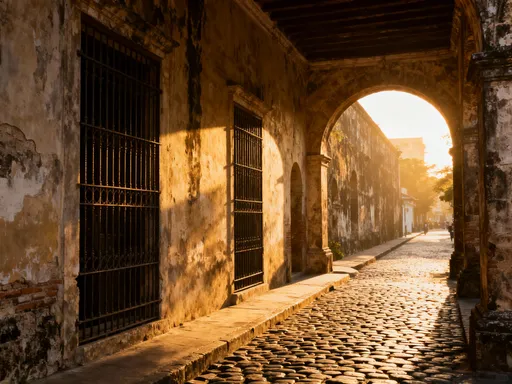
Intramuros stands as Manila’s historic heartbeat, a walled city built in the 16th century by Spanish colonizers to serve as both a fortress and a center of administration and faith. Walking its cobblestone lanes feels like stepping into a layered narrative where every archway, plaza, and bastion carries echoes of conquest, resilience, and cultural fusion. The name itself, meaning 'within the walls,' speaks to its original purpose: protection against external threats and a symbolic boundary between colonial power and the surrounding communities. Yet today, Intramuros is far more than a relic—it is a living museum that continues to shape Filipino identity through its preserved structures and enduring legacy.
Among its most revered landmarks is Fort Santiago, once used as a military stronghold and later as a prison during various colonial periods, including World War II. The fort’s gates have witnessed pivotal moments in Philippine history, including the imprisonment of national hero Dr. Jose Rizal before his execution. Visitors can walk the same ramparts he once paced, reflecting on the weight of history embedded in the weathered stones. Equally significant is Plaza de Roma, surrounded by key institutions such as Manila Cathedral and the Ayuntamiento Building, which together form a tableau of ecclesiastical and civic authority rooted in Spanish urban planning principles.
What makes Intramuros architecturally profound is not just its age but the way it embodies a hybrid culture. While the layout follows the Spanish colonial grid system—emphasizing symmetry, central plazas, and radiating streets—the materials and craftsmanship often reflect local adaptation. Volcanic tuff, known locally as adobe, was widely used in construction, giving the buildings their distinct golden-gray hue. These materials, though durable, have required ongoing preservation efforts, especially after heavy damage during the Battle of Manila in 1945. Restoration projects led by the Intramuros Administration have carefully rebuilt many structures using traditional techniques, ensuring authenticity while making them accessible to new generations.
Preserving Intramuros matters not only for tourism but for national memory. It serves as a physical archive of how architecture can reflect power, resistance, and cultural synthesis. For families visiting Manila, a stroll through Intramuros offers children and adults alike a tangible connection to the past—something textbooks alone cannot provide. By walking these streets with intention, one begins to understand how urban design shapes identity, how walls can tell stories, and how heritage, when respected, becomes a bridge between centuries.
Spanish-Era Churches: Where Faith Meets Form
No exploration of Manila’s architectural soul is complete without visiting its Spanish-era churches, particularly San Agustín Church, the oldest stone church in the Philippines and a UNESCO World Heritage Site. Located within Intramuros, this Baroque masterpiece has withstood earthquakes, wars, and time itself, standing as a testament to both spiritual devotion and architectural endurance. Its thick walls, carved wooden doors, and soaring barrel-vaulted ceiling create an atmosphere of solemn grandeur. Inside, intricate religious frescoes and gilded altars speak to the fusion of European ecclesiastical design with Filipino artistry, where local artisans interpreted Catholic iconography through their own cultural lens.
San Agustín is not merely a place of worship but a cultural repository. The church houses a museum displaying centuries-old religious artifacts, vestments, and manuscripts, many brought from Mexico and Spain via the Manila-Acapulco Galleon Trade. This global exchange influenced not only religious practice but also architectural details—such as the use of trompe-l'œil painting techniques on ceilings to create the illusion of domes where structural limitations prevented actual construction. Such innovations reveal how builders adapted European styles to local conditions, resulting in a unique Filipino Baroque expression.
Other notable churches include Binondo Church, dedicated to Our Lady of the Most Holy Rosary, and Quiapo Church, home to the revered Black Nazarene. While Quiapo Church has undergone multiple reconstructions due to fires and bombings, its current structure retains the traditional Latin cross plan and twin bell towers characteristic of Spanish colonial church architecture. These sites remain active centers of faith, drawing thousands during religious festivals such as Good Friday processions. Visitors are encouraged to observe quietly, dress modestly, and refrain from flash photography during services, honoring the sacred nature of these spaces.
Restoration efforts across Manila’s historic churches are ongoing, often supported by both government agencies and private foundations. Skilled craftsmen use lime-based mortars, hand-carved wood, and traditional masonry methods to maintain authenticity. These projects do more than preserve buildings—they sustain traditional trades and pass knowledge to younger artisans. For travelers, attending a Sunday Mass or joining a guided tour offers deeper insight into how faith and form intertwine in Philippine culture. These churches are not frozen in time; they continue to evolve, serving both spiritual and communal roles in contemporary Manila.
Art Deco Echoes in Quiapo and Santa Cruz
Beyond the colonial core, Manila’s 1930s architectural legacy lives on in neighborhoods like Quiapo and Santa Cruz, where Art Deco buildings stand as elegant reminders of a modernist awakening. During the American colonial period, particularly under the Commonwealth government of the 1930s, the city embraced international styles adapted to the tropical climate. Art Deco, with its geometric patterns, streamlined forms, and decorative motifs, became a symbol of progress and cosmopolitanism. Though many of these structures have faded under decades of neglect, their presence still adds texture and rhythm to the urban landscape.
In Quiapo, one can find commercial buildings with stepped facades, zigzag motifs, and cantilevered awnings designed to provide shade from the intense sun. Pastel-colored stucco walls—once vibrant in peach, mint, and coral—still peek through layers of grime and graffiti. These design elements were not merely aesthetic; they served practical purposes, such as improving ventilation and protecting pedestrians from rain. The blend of functionality and style exemplifies how architects of the era responded to both global trends and local needs, creating a distinct Filipino interpretation of Art Deco.
Santa Cruz, once known as Manila’s shopping district, features several surviving examples of pre-war commercial architecture. Buildings like the Capitol Theater, though currently in ruins, once boasted grand lobbies, neon signage, and ornate metal grilles—hallmarks of the era’s cinematic glamour. While some structures have been lost to redevelopment or decay, others have been repurposed into markets, offices, or residential units. Grassroots organizations such as the Heritage Conservation Society have advocated for the protection of these buildings, emphasizing their historical value and architectural uniqueness.
Urban development pressures continue to threaten Manila’s Art Deco heritage, with older buildings often demolished for high-rise apartments or parking lots. However, growing public awareness has sparked renewed interest in preservation. Photography tours, community-led documentation projects, and social media campaigns have helped spotlight these overlooked gems. For visitors, exploring Quiapo and Santa Cruz offers a chance to see Manila beyond the postcard images—revealing a city layered with history, resilience, and quiet beauty. These neighborhoods remind us that modernity does not require erasing the past, but rather reimagining it with care.
Bahay na Bato: The Filipino Heritage House Reimagined
Scattered throughout Manila’s older districts are remnants of the bahay na bato, or 'stone house,' a residential architectural style that emerged during the Spanish colonial period as an evolution of the traditional bahay kubo (nipa hut). Designed for comfort, durability, and social hierarchy, these homes combined Filipino ingenuity with foreign influences. Typically built with stone or brick lower levels and wooden upper floors, they elevated living spaces above flood-prone ground while incorporating tropical design principles such as high ceilings, large windows, and wide overhanging eaves.
One of the most distinctive features of the bahay na bato is the use of capiz-shell windows, which allowed natural light to filter through while maintaining privacy and airflow. Sliding capiz panels, often paired with capiz lanterns, created a soft, luminous interior ambiance unique to Philippine homes. The zaguan—a covered passageway on the ground floor—was originally used for carriages and storage but later adapted for shops or service areas. Above, the principal living quarters, known as the entresuelo and azotea, provided space for family life, entertaining guests, and even rooftop gardening.
Today, few original bahay na bato remain in private use, but many have been restored and repurposed as museums, cafés, and cultural centers. Casa Manila in Intramuros offers a reconstructed example of an upper-class Spanish-era home, complete with period furniture, religious altars, and courtyard gardens. Similarly, the Lopez Heritage House in Pasig, though outside central Manila, illustrates how these homes were designed around family and faith, with separate areas for men and women and a central chapel for private worship.
The adaptive reuse of bahay na bato structures ensures their survival in a rapidly changing city. In Binondo, heritage houses now house boutique restaurants serving traditional Filipino dishes, allowing diners to experience history with every meal. These transformations do not diminish the homes’ significance; rather, they demonstrate how heritage can be both preserved and made relevant. For families and travelers interested in sustainable tourism, visiting these sites supports conservation efforts while offering intimate encounters with Manila’s domestic architectural past.
American Colonial Imprints: From Post Offices to Theaters
The early 20th century brought a new wave of architectural influence to Manila under American colonial rule, introducing neoclassical, Beaux-Arts, and Art Deco styles that emphasized order, symmetry, and civic grandeur. Public buildings from this era were designed to convey authority, modernity, and democratic ideals, often serving as symbols of a newly established administrative system. Among the most iconic is the Manila Central Post Office, a grand structure facing the Pasig River with Ionic columns, a central dome, and a façade adorned with sculptural reliefs depicting communication and national identity.
Completed in 1926, the Post Office building exemplifies the American vision for Manila as a modern capital. Its symmetrical layout, expansive interior halls, and use of local materials like adobe and marble reflect a blend of imported design principles and regional adaptation. Though severely damaged by fire during World War II, it was meticulously restored and continues to function as a working post office, making it both a historical landmark and a living institution. Visitors can admire its marble staircases, vaulted ceilings, and the famous inscription above the entrance: 'Service to the Public.'
Another architectural jewel from this period is the Metropolitan Theater, originally opened in 1931 as a premier venue for opera, film, and dance. Designed by Filipino architect Juan M. Arellano, the Met combines Art Deco styling with Filipino motifs—such as native textiles, mythological figures, and tropical flora—carved into its façade and interior details. After decades of neglect and multiple closures, the theater underwent a major restoration and reopened in recent years, reclaiming its role as a cultural hub. Its revival symbolizes a broader effort to honor Manila’s layered architectural heritage, recognizing that beauty and meaning can coexist across eras.
These American-era buildings reflect a complex chapter in Philippine history—one of colonization, but also of education, infrastructure development, and artistic expression. Rather than rejecting this legacy, Manila has chosen to preserve it as part of its national story. Walking through these spaces today, one senses the weight of history and the hope embedded in their design. They remind us that architecture is never neutral; it carries the values, aspirations, and contradictions of its time.
Modern Manila: Skyscrapers and Cultural Identity
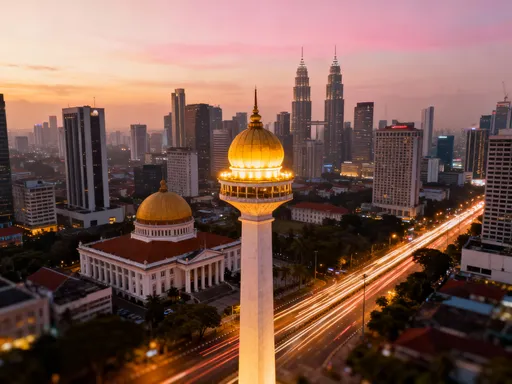
As Manila expands, its skyline transforms, particularly in business districts like Makati and Bonifacio Global City (BGC), where glass towers and steel frameworks define the urban silhouette. These modern structures represent economic growth, technological advancement, and global connectivity. Yet amid the rise of high-rises, architects and planners are increasingly integrating Filipino cultural elements into contemporary designs, ensuring that modernity does not erase identity.
In BGC, for example, some buildings incorporate capiz-inspired façades, lattice patterns reminiscent of traditional weaving, and green spaces modeled after ancestral gardens. The Mind Museum, a science center in Taguig, uses flowing forms and natural lighting to evoke a sense of wonder, while its exterior materials reference local stone and wood. Similarly, newer hotels and mixed-use developments feature open-air lobbies, indoor water features, and shaded courtyards—design choices that respond to the tropical climate while echoing the spatial logic of traditional Filipino homes.
This fusion of old and new is not always seamless. Critics argue that rapid urbanization often prioritizes profit over preservation, leading to the demolition of historic buildings in favor of generic condominiums and malls. Traffic congestion, air pollution, and loss of public space remain pressing challenges. However, there is growing momentum toward sustainable urban planning, with advocacy groups pushing for heritage zoning, adaptive reuse policies, and pedestrian-friendly design.
For residents and visitors alike, the contrast between old and new offers a richer understanding of Manila’s identity. Standing at the foot of a skyscraper while gazing at a centuries-old church nearby creates a powerful visual dialogue between eras. It invites reflection on what progress means and how cities can grow without losing their soul. Modern architecture, at its best, does not replace the past but converses with it—creating a dynamic, evolving urban tapestry.
How to Experience Manila’s Architecture Like a Local
To truly appreciate Manila’s architectural depth, one must move beyond checklist tourism and embrace slow, mindful exploration. Start with guided walking tours offered by organizations like Escolta Pop Store or the Intramuros Administration, where knowledgeable locals share stories behind facades, hidden courtyards, and forgotten alleys. These tours often include access to private buildings or rooftops, offering perspectives rarely seen by casual visitors.
Timing matters. Early mornings, especially on weekdays, provide the best light for photography and fewer crowds, allowing for quiet contemplation. The golden hour—just after sunrise or before sunset—casts a warm glow on stone walls and Art Deco details, enhancing their textures and colors. Bring a lightweight camera or smartphone with a wide-angle lens, and consider using manual settings to capture interior spaces with low lighting. Always ask permission before photographing people or private properties, especially in residential areas or active churches.
Use technology wisely. Apps like Google Arts & Culture and Heritage Map PH offer self-guided tour options, architectural labels, and historical context for key sites. Some even include augmented reality features that overlay historical images onto present-day views, creating a vivid sense of change over time. For deeper learning, download audio guides or listen to podcasts focused on Philippine architecture and urban history.
Explore beyond the usual spots. While Intramuros and Rizal Park are essential, consider visiting lesser-known areas like San Miguel, Paco, or Sta. Ana, where heritage homes and old churches await discovery. Try local eateries housed in restored buildings—like a café in a former schoolhouse or a restaurant in a colonial warehouse—and savor dishes that connect taste to place. Engage respectfully with communities, support local conservation efforts, and leave spaces as you found them.
Most importantly, travel with curiosity and humility. Manila’s architecture is not a static exhibit but a living, breathing part of daily life. By walking its streets with awareness, you become not just an observer but a participant in its ongoing story.
Conclusion
Manila’s architecture isn’t frozen in time—it’s a living conversation between past and present. Each building, whether crumbling or restored, adds a voice to the city’s identity. From the fortified walls of Intramuros to the soaring spires of Spanish churches, from the geometric grace of Art Deco facades to the thoughtful reuse of heritage homes, Manila reveals itself layer by layer. Even its modern skyline carries echoes of tradition, proving that progress and preservation can coexist.
By walking its streets with curiosity and respect, we don’t just witness history—we become part of its next chapter. Families, travelers, and dreamers alike can find meaning in these stones and structures, learning how culture is built not only in monuments but in the quiet details of daily life. Manila invites us to look closely, to listen deeply, and to honor the stories etched in every wall. In doing so, we help ensure that its architectural soul continues to inspire for generations to come.