You Won't Believe These Hidden Natural Wonders in Austria's Salzkammergut
Nestled between alpine peaks and crystal-clear lakes, Salzkammergut is more than just postcard scenery—it’s a quietly powerful escape. I went looking for peace and found something unexpected: untouched forests, secret waterfalls, and villages frozen in time. This isn’t the Austria you see in guidebooks. If you're craving raw, authentic nature without the crowds, this region delivers in ways you can’t imagine. Let me show you why it deserves your next journey.
Discovering Salzkammergut: More Than Just Lakes and Postcards
Stretching across the federal states of Upper Austria, Salzburg, and Styria, the Salzkammergut region spans over 600 square kilometers of mountainous terrain, glacial lakes, and centuries-old settlements. Recognized as a UNESCO World Heritage Site since 1997, it owes its status not only to its breathtaking natural beauty but also to its cultural legacy, particularly the Hallstatt-Dachstein archaeological sites that reveal human habitation dating back over 7,000 years. Yet despite this global recognition, much of Salzkammergut remains refreshingly underexplored by mainstream tourism. While places like Hallstatt attract thousands daily, just a short drive or train ride away lie valleys and hamlets where the rhythm of life follows the seasons, not the tourist calendar.
What makes Salzkammergut so compelling is the duality of its identity. On one hand, it’s a symbol of Austria’s alpine charm—postcard-perfect villages reflected in glassy lakes, chalets with overflowing flower boxes, and cable cars ascending to panoramic viewpoints. On the other, it harbors a quieter, wilder soul. The region’s network of lesser-known trails, secluded coves, and forested highlands offers an alternative narrative: one of solitude, stillness, and deep connection with nature. This contrast is precisely what makes it ideal for travelers seeking more than just scenic snapshots.
The popularity of Hallstatt, while justified, has also created a paradox. Its fame has led to overtourism, with cruise buses lining the narrow roads and selfie sticks crowding the iconic promenade. But the beauty of Salzkammergut is that it doesn’t rely on a single star. Beyond the spotlight lies a constellation of equally stunning, yet far less visited, locations. Places like the Totes Gebirge range, the Kalmberg plateau, and the Obertraun valley offer the same alpine grandeur without the congestion. By shifting focus from the well-trodden to the overlooked, visitors can experience the region in a way that feels personal and profound.
The Magic of Hidden Lakes: Where Stillness Meets Majesty
While Lake Hallstatt and Lake Wolfgang dominate travel brochures, Salzkammergut’s quieter lakes offer a different kind of magic—one defined by stillness, clarity, and intimacy. Take Lake Kammer, for instance. Nestled near the village of St. Konrad, this serene body of water is ringed by dense pine forests and overlooked by the towering Schafberg mountain. Unlike its busier neighbors, Lake Kammer sees only a trickle of visitors, even in peak summer. The result is a sense of exclusivity, as if you’ve stumbled upon a private sanctuary. The water here is so clear that pebbles on the lakebed are visible several meters down, and the surface often mirrors the sky with near-perfect precision.
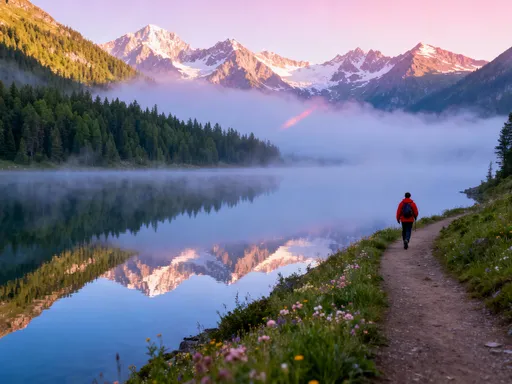
Another gem is Lake Altaussee, located in the heart of the Ausseerland region. At over 180 meters deep, it’s one of the clearest lakes in Austria, with visibility reaching up to 25 meters under optimal conditions. What sets it apart is its sense of seclusion. Surrounded by limestone cliffs and accessible via a winding forest road, it feels worlds away from the commercialized shores of more famous lakes. Early morning is the best time to visit—when mist hovers above the water like breath, and the only sounds are the lap of gentle waves and the distant call of a kingfisher. I once swam here at sunrise, the water cool but not cold, the world hushed as if holding its breath. Floating on my back, staring up at the pink-streaked sky, I felt a rare kind of peace—a deep, wordless contentment that only nature can provide.
These hidden lakes aren’t just beautiful; they’re restorative. Studies have shown that being near water can reduce stress, lower heart rate, and improve mental clarity. In Salzkammergut, where the lakes are unpolluted and largely undisturbed, the effect is amplified. There are no jet skis, no loud music, no crowded beaches—just pure, unspoiled nature. Whether you choose to swim, paddle, or simply sit on the shore and watch the light shift across the water, these lakes offer a chance to slow down and reconnect with what matters.
Secret Waterfalls and Moss-Covered Gorges
Deep within Salzkammergut’s forested slopes, away from paved paths and tourist signs, lie some of its most enchanting features: hidden waterfalls and moss-draped gorges. These natural wonders are not advertised on maps or highlighted in guidebooks, but they reward those willing to seek them out. One such cascade is the Gumpenstein Waterfall near Grundlsee, a slender ribbon of water that tumbles over a limestone ledge into a fern-lined pool below. The trail to reach it is narrow and shaded, winding through ancient beech trees and across wooden footbridges. As you approach, the sound grows—a steady rush that builds anticipation. Then, suddenly, the trees part, and there it is: a delicate curtain of water, shimmering in the dappled light.
The experience of discovering a hidden waterfall is multisensory. The air grows cooler, carrying the fine mist that kisses your skin. The scent of damp earth and moss fills your lungs. The roar of the water creates a natural white noise, drowning out thoughts and distractions. It’s easy to stand there, transfixed, feeling as though time has slowed. These moments are not just scenic—they’re meditative. They remind us that nature operates on its own rhythm, indifferent to schedules and screens.
Accessing these sites requires some preparation. While many trails are well-marked, others are less maintained and may require sturdy footwear and basic navigation skills. It’s important to respect the environment: stay on designated paths, avoid disturbing wildlife, and carry out all trash. Some waterfalls are located in protected areas where swimming or climbing may be restricted to preserve the ecosystem. Responsible visitation ensures that these places remain pristine for future generations. Local tourism offices often provide updated trail information and safety guidelines, and consulting them before departure is a small but meaningful step toward sustainable travel.
Untouched Forests and Alpine Meadows: Nature’s Living Canvas
The forests of Salzkammergut are not merely backdrops—they are living, breathing ecosystems teeming with life. From the lowland beech and spruce woods to the high-altitude pine groves, these woodlands support a rich diversity of flora and fauna. In spring and early summer, the forest floor bursts into color with wild garlic, wood anemones, and lady’s slipper orchids. Higher up, alpine meadows explode with gentians, edelweiss, and mountain avens, their vibrant hues contrasting against the rugged terrain. These meadows are not accidental; they are the result of centuries of sustainable grazing, a tradition that continues today through local farming practices.
For hikers, the region offers countless routes that balance accessibility with solitude. The hike from Filzmoos to the Zwieselalm, for example, climbs gradually through shaded forest before opening onto a high plateau with sweeping views of the Dachstein massif. Fewer than 100 people make this trek on an average day, making it a perfect choice for those seeking quiet contemplation. Another rewarding path is the circular trail around the Loser mountain, which passes through larch forests, crosses crystal-clear streams, and ends at a sun-drenched alpine hut serving homemade cheese and apple strudel. These experiences are not about conquering peaks but about immersion—feeling the crunch of gravel underfoot, breathing in the pine-scented air, and watching clouds drift across distant ridges.
Wildlife encounters, while never guaranteed, add another layer of wonder. Red deer are commonly seen at dawn and dusk, their silhouettes moving gracefully through the mist. Marmots whistle from rocky outcrops, and golden eagles soar high above the valleys. Birdwatchers may spot the black woodpecker or the alpine accentor, both species sensitive to habitat disturbance. The presence of these animals is a testament to the region’s ecological health and the success of conservation efforts. By choosing low-impact trails and respecting wildlife boundaries, visitors contribute to the ongoing protection of this delicate balance.
Villages That Time Forgot: Authentic Alpine Life
While cities like Vienna and Salzburg dazzle with grandeur, the soul of Austria lives in its small villages—and nowhere is this more evident than in Salzkammergut’s quieter corners. Places like Grundlsee, Filzmoos, and Altaussee have resisted the pull of mass tourism, preserving their character through quiet pride and tradition. These are not staged replicas for visitors; they are real communities where life unfolds at a human pace. Women hang laundry outside chalets, children ride bikes down cobbled lanes, and farmers lead cows to pasture each morning in a ritual unchanged for generations.
In Filzmoos, a village of fewer than 1,500 residents, tourism exists but doesn’t dominate. Family-run guesthouses outnumber hotels, and meals are served with warmth, not performance. I stayed at a centuries-old farmhouse where the owner, Frau Huber, greeted me with a bowl of fresh cherries from her garden and a hand-drawn map of nearby trails. Dinner was a simple but nourishing affair: roasted potatoes, smoked trout from the local lake, and a slice of warm Linzertorte. There was no Wi-Fi in the dining room—by design. “We want people to talk,” she said with a smile. That night, as I fell asleep to the sound of cowbells echoing from the valley, I felt a deep sense of belonging.
These villages thrive because they value authenticity over convenience. Crafts like woodcarving, lace-making, and traditional baking are still practiced, not as tourist attractions but as everyday skills. Local festivals, such as the Almabtrieb (cattle descent celebration), are community events rooted in gratitude for a safe grazing season, not staged for photos. Staying in such places allows travelers to participate, however briefly, in a way of life that prioritizes connection, seasonality, and care. It’s a powerful antidote to the fast-paced, digital-heavy world many of us come from.
How to Visit Responsibly: Balancing Beauty and Preservation
The growing interest in off-the-beaten-path travel brings both opportunity and responsibility. Salzkammergut’s fragile ecosystems—its clear lakes, ancient forests, and delicate alpine flora—are vulnerable to overuse. Trampling vegetation, littering, and noise pollution can degrade even the most remote areas over time. That’s why responsible visitation is not optional; it’s essential. The principle is simple: leave no trace. This means packing out all waste, staying on marked trails, and avoiding shortcuts that erode soil or damage plant life.
One of the most effective ways to reduce impact is to visit during shoulder or off-season months. While July and August draw the largest crowds, May, June, September, and October offer mild weather and far fewer people. Spring brings blooming wildflowers and rushing waterfalls fed by snowmelt, while autumn paints the forests in gold and crimson. Traveling outside peak season not only enhances the experience but also distributes pressure on infrastructure and natural sites. It’s a win-win: you gain solitude, and the environment gains respite.
Another key aspect of responsible travel is supporting local economies. Instead of eating at chain restaurants or buying mass-produced souvenirs, opt for family-owned inns, farm stands, and craft markets. When you purchase honey from a local beekeeper or stay at a guesthouse run by a multi-generational family, your money stays in the community. This kind of tourism fosters sustainability, ensuring that preservation efforts are economically viable. Many local initiatives, such as guided nature walks led by residents or seasonal cooking classes, offer meaningful ways to engage while contributing directly to conservation and cultural continuity.
Putting It All Together: Planning Your Own Hidden Escape
Creating a meaningful journey through Salzkammergut begins with intention. Start by choosing the right time: late spring to early autumn offers the best conditions for hiking, swimming, and exploring. Mid-May to mid-June and September to early October are particularly ideal, combining pleasant temperatures with minimal crowds. If you prefer winter solitude, consider visiting in late November or early March, when the snow-covered landscapes are pristine but ski resorts are less congested.
Transportation within the region is flexible. While having a car provides the most freedom to reach remote trails and villages, Austria’s public transit system is reliable and scenic. Regional trains and buses connect major towns like Bad Ischl, Gosau, and Bad Aussee, and many trails are accessible from transit stops. For example, the bus from Bad Ischl to Grundlsee runs hourly and drops passengers within walking distance of several hidden lakes and forest paths. If driving, rent a compact vehicle—roads in mountainous areas are narrow, and parking in villages is limited.
A sample four-day itinerary might begin in Bad Ischl, the former imperial summer residence, where you can explore its historic center before heading to the quieter shores of Lake Wolfgang’s northern edge. Day two could focus on the Altaussee area, including a hike to the Lake Toplitz trail and a visit to the village’s salt mine museum. On day three, travel to Filzmoos and take the Zwieselalm route, ending with a meal at a family-run alpine hut. The final day might include a gentle forest walk to a hidden waterfall, followed by a farewell dinner at a local guesthouse. The goal isn’t to see everything but to savor the moments that matter.
Preparation enhances the experience. Pack layers—alpine weather changes quickly—and bring a reusable water bottle, trail snacks, and a physical map as backup. Download offline trail maps or apps like Komoot or Austria Topo for navigation. Most importantly, set an intention: to move slowly, observe deeply, and engage with kindness. When you approach travel as a form of presence rather than consumption, the rewards multiply.
Conclusion
Salzkammergut isn’t just a destination—it’s a reminder of what travel can be when stripped of performance and filters. Its hidden natural wonders don’t shout; they whisper. But if you listen closely, they offer a deeper connection—to nature, to place, to yourself. The real journey isn’t about checking landmarks off a list. It’s about stepping off the map and finding something real. In a world that often feels rushed and artificial, Salzkammergut stands as a quiet testament to the enduring power of untouched beauty. It invites you not to conquer, but to witness. Not to post, but to feel. And in that simplicity lies its greatest gift: the chance to remember who you are when the noise fades away.